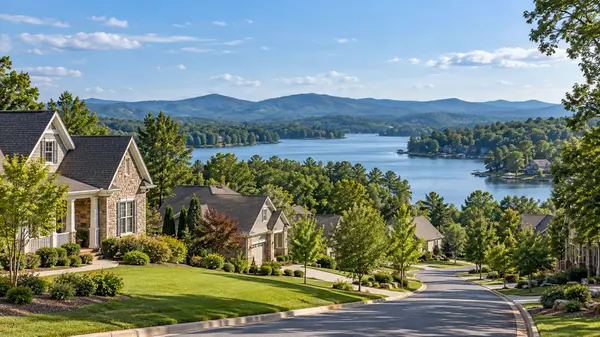
Seneca Home Buyer's Guide: A to Z
Buying in Seneca, South Carolina, starts with a sustainable payment plan, lender-reviewed financing, and a clear strategy for evaluating homes. This Seneca Home Buyer's Guide explains how to budget, search, compare properties, make an offer, and close with confidence in Seneca, a city in Oconee County. Local taxes, insurance, property condition, location, and seller timing can all affect the purchase. A well-prepared buyer can make decisions based on long-term affordability rather than pressure from a single listing.
Seneca Home Buyer's Guide: Real Estate Overview
Current, independently verifiable city-level figures for median closed-sale price, median days on market, list-to-sale ratio, and active inventory were not available in the supplied sources. Buyers should request a property-specific review of current local MLS activity before relying on a market-wide snapshot.
| Metric | Current Seneca market status |
|---|---|
| Median home sale price | Confirm with current local MLS data before making an offer |
| Median days on market | Varies by price range, location, and condition |
| List-to-sale price ratio | Varies by property and seller strategy |
| Active inventory or months of supply | Changes as listings enter and leave the market |
A market-wide number can provide context, but it cannot replace comparison with recent sales, active competition, and the particular condition of the home you want to buy.
Seneca Home Buyer's Guide: What the Market Looks Like Right Now
Seneca is best approached as a property-by-property market because location, lot characteristics, condition, and water-related features can create very different negotiating positions. Without a current named MLS or Realtor board report for area-wide metrics, buyers should avoid assuming that every seller will negotiate the same way or that every listing will move on the same schedule.
Well-priced homes with updated systems, practical layouts, and clear maintenance records may attract stronger interest than homes needing substantial work. Many resale homes in and around Seneca warrant property-specific review of roof age, electrical updates, plumbing, heating, cooling, drainage, and renovation records. The Seneca area page can help buyers begin comparing local property categories and home-search priorities.
A buyer-friendly opportunity often comes from details rather than a broad market label. A seller may be more receptive when a home has been listed for longer, when repairs are evident, or when a flexible closing date solves a timing issue. Conversely, a home that is appropriately priced and needs little immediate work can still require a clean, well-supported offer.
Before choosing a price or negotiating strategy, compare relevant recent sales, current competing listings, seller timing, financing requirements, taxes, insurance availability, and any community restrictions. That preparation is more useful than relying on a single headline number.
Is Seneca a Buyer's or Seller's Market Right Now?
- Seneca’s market balance can differ by price point, property condition, and location, so buyers should evaluate competing listings before writing an offer.
- Days on market should be checked for comparable homes, not assumed from an area-wide average that may not match the property type.
- Offer competition is often strongest for homes that are accurately priced, well maintained, and ready for occupancy.
- For a buyer entering today, the advantage comes from complete financing preparation and careful comparison, not from assuming every seller will accept the same terms.
Step 1: Set a Realistic Budget Before You Search
A realistic Seneca budget is the monthly amount you can maintain while preserving savings, handling repairs, and meeting other financial priorities. Start with gross income, recurring monthly debt, cash reserves, down payment funds, expected utilities, insurance, maintenance, and lender costs. A lender may use debt-to-income guidelines to determine eligibility, but eligibility is not the same as a payment that feels comfortable after you move in.
Property taxes should be part of the calculation from the beginning. Under Oconee County’s published guidance, owner-occupied legal residences may qualify for a 4% assessment ratio, while other residential property is generally assessed at 6%. The final bill depends on assessed value, applicable millage, exemptions, ownership status, and the applicable tax year. Use the county’s property-tax information and request a property-specific estimate before finalizing a budget.
HOA dues are not universal in Seneca. Where they apply, ask for the current monthly or annual amount, payment schedule, governing documents, reserve information, and any pending assessments. Insurance also needs individual attention, particularly for homes with older roofs, substantial acreage, or features that may affect coverage.
Pre-qualification is generally an early lender conversation based on information you provide. Genuine affordability is the payment level that continues to work after accounting for savings goals, home maintenance, travel, family costs, and unexpected expenses. Run several price, down-payment, and rate scenarios before setting a search ceiling.
Monthly Cost Breakdown by Price Point in Seneca
Using the Freddie Mac 30-year fixed-rate average of 7.40% as of October 8, 2026, and Oconee County’s published 4% owner-occupied assessment ratio, the illustrations below assume 20% down. Mortgage figures include principal and interest only. Property-tax, insurance, HOA, mortgage-insurance, and lender-fee amounts require a property-specific estimate and are therefore not represented as fixed Seneca averages. Sources: Freddie Mac Primary Mortgage Market Survey and Oconee County property-tax information.
| Purchase price | Estimated mortgage payment | Property tax | Insurance | Total estimated monthly cost |
|---|---|---|---|---|
| $250,000 entry-level | $1,384 | Property-specific estimate required | Property-specific quote required | Mortgage payment plus verified taxes and insurance |
| $450,000 median-range | $2,491 | Property-specific estimate required | Property-specific quote required | Mortgage payment plus verified taxes and insurance |
| $700,000 move-up | $3,875 | Property-specific estimate required | Property-specific quote required | Mortgage payment plus verified taxes and insurance |
Step 2: Get Pre-Approved Before You Search in Seneca
Pre-approval gives you a clearer buying range and makes an offer easier for a seller to evaluate. In Seneca, a buyer who has already supplied financial documentation can respond more confidently when a suitable home appears, especially when the property is well priced or has limited direct competition.
Pre-qualification is typically based on preliminary financial information, while pre-approval usually involves a lender reviewing documents and credit details. The Consumer Financial Protection Bureau’s pre-approval guidance explains that lenders may request different levels of documentation and that buyers should understand what their letter represents.
Prepare recent pay stubs, W-2 forms or tax returns, bank and investment statements, identification, monthly debt details, and explanations for large deposits. Self-employed buyers may need business returns, profit-and-loss information, or other income documentation. Avoid opening new credit accounts, moving large sums without records, or making major purchases while the loan is being finalized.
A pre-approval letter does not eliminate the need to keep your finances stable. It does, however, give you a more reliable foundation for setting alert criteria, comparing homes, and structuring an offer that fits your actual cash-to-close plan.
Step 3: Choose the Right Seneca Area for Your Lifestyle and Budget
The right Seneca location depends on your routine, property priorities, maintenance tolerance, and long-term plans. Instead of treating the city as one uniform market, compare community types and the costs that accompany each.
Central and established in-town settings can suit buyers who value proximity to everyday services, restaurants, and local activity. These areas may include older single-family homes, smaller lots, and renovation opportunities. Buyers should compare roof age, electrical updates, plumbing, heating, cooling, drainage, and maintenance history on an individual-property basis.
Properties with lake access or water-oriented amenities may appeal to buyers prioritizing recreation, views, or a second-home feel. Pricing can vary substantially based on actual access rights, dock permissions, shoreline conditions, road access, topography, and whether those features transfer with the property. Confirm each feature in writing rather than assuming an address near water includes usable access.
Newer neighborhood settings can fit buyers who prefer more recent construction, contemporary layouts, and potentially fewer near-term renovation projects. The tradeoff can include HOA obligations, smaller lots, or less flexibility in exterior changes. Compare dues, rules, insurance requirements, and total monthly ownership costs along with the purchase price.
Larger-lot and rural-feeling properties can work for buyers seeking privacy, gardening space, storage, or room for outdoor activities. These homes may require additional review of driveway access, utility service, drainage, septic arrangements where applicable, and ongoing land maintenance.
School considerations should be researched school by school. Seneca High School serves grades 9–12 in Oconee 01, while assignment boundaries, programs, and enrollment procedures should be confirmed directly with the appropriate district.
Step 4: Search Strategically and Evaluate Properties
An effective Seneca search begins with a clear list of non-negotiables, a payment-based price ceiling, and alerts that match the homes you can realistically pursue. Set property alerts through the local MLS access available to you, then refine your criteria after touring enough homes to understand local tradeoffs.
At each showing, focus on the factors that can affect value and ownership costs:
- Compare asking price with the home’s location, lot, updates, apparent condition, and current competition.
- Review driveway condition, grading, drainage paths, exterior materials, and signs of deferred maintenance.
- Ask about utility providers, HOA rules, septic systems where relevant, and property features that may affect insurance.
- Note the approximate age and visible condition of roofing, electrical components, plumbing, heating, and cooling.
- For larger lots or water-related features, verify access, boundaries, maintenance responsibilities, and permitted uses.
A disciplined search helps you recognize a good fit without stretching for a feature that creates a larger long-term obligation. Keep notes after every tour so that decisions are based on consistent comparisons rather than first impressions.
Step 5: Make a Competitive Offer in Seneca
A competitive Seneca offer aligns price, financing, timing, and contract terms with the individual property and seller’s priorities. The strongest offer is not always the highest number. A seller may value a dependable lender, a clear timeline, fewer avoidable complications, or a closing date that fits their move.
Earnest money is negotiated and should be discussed with your agent, lender, and closing attorney in the context of the contract. Rather than relying on a universal local amount, choose a deposit that demonstrates commitment while remaining consistent with your available funds and risk tolerance.
When competition seems likely, escalation language can be useful only when it includes a firm maximum price and a clear process for documenting competing terms. A buyer can also improve an offer through realistic deadlines, timely lender communication, and flexibility on possession when that flexibility does not create a financial burden.
Negotiation can be especially productive when a property needs updates, has been available longer than comparable homes, or has a seller with a clear timing need. In those cases, price is only one lever. Closing-cost contributions, repairs, personal-property requests, and closing dates may matter just as much.
Keep every term aligned with the payment and cash-to-close amount you have already planned. A successful offer is one you can complete comfortably, not simply one that wins.
Pro-Tip: Do not base an offer only on the list price. Compare the home’s condition, competing listings, seller timing, and your full monthly ownership cost before deciding on terms.
Step 6: Inspections, Due Diligence, and Closing in Seneca
After an accepted offer, buyers should move promptly through property review, financing, insurance, title work, and final closing preparations. The contract establishes the applicable deadlines, so the first priority is understanding every date and coordinating qualified professionals early.
The appropriate reviews depend on the property. A general home inspection is common for resale homes, while roof, wood-destroying-organism, sewer, septic, water, structural, electrical, drainage, or specialist reviews may be appropriate based on the home’s age, construction, lot, and visible conditions. Homes with acreage, water features, or older systems may need additional questions before deadlines expire.
South Carolina real estate closings are conducted by attorneys. The closing attorney coordinates document preparation, title work, recording, and transfer of funds. Buyer costs can include lender charges, attorney and title-related fees, prepaid insurance, taxes, recording charges, and other loan-specific items.
Fannie Mae’s consumer guidance describes a planning range of 2% to 5% of the mortgage amount for closing costs. Your final estimate depends on the loan, contract, property, prepaid items, and local charges, so confirm lender estimates before entering a contract.
Before signing, review the Closing Disclosure, confirm insurance, verify the funds required, and complete a final walkthrough to make sure the property is in the agreed condition.
New Construction vs. Resale Homes in Seneca
| Consideration | New construction | Resale home |
|---|---|---|
| Typical price premium | Depends on builder, lot, finishes, and incentives | Depends on location, condition, updates, and lot characteristics |
| Negotiability | Incentives may involve rate, closing-cost, or upgrade options | Negotiation may involve price, repairs, timing, or concessions |
| Inspection considerations | Review build quality, drainage, completion items, and written warranty terms | Review maintenance history and the condition of major systems |
| Customization options | May allow plan, finish, and option choices before completion | Changes are generally made after closing |
| Move-in timeline | May be immediate or tied to construction completion | Usually follows the agreed contract timeline |
| Warranty coverage | Builder warranty terms may apply | Coverage depends on transferred or separately purchased warranties |
| Financing differences | Builder-affiliated financing may offer incentives, compare total loan terms | Buyers can compare loan options and negotiate financing terms |
New construction and resale homes can both be strong options when the total cost, location, condition, financing terms, and move-in timing fit your goals.
Ready to Buy in Seneca?
Buying in Seneca calls for a plan that accounts for payment comfort, property condition, location, and contract timing. Suzanne (Sue) Brown works with buyers at every price point, from first-time buyers setting budgets to move-up buyers preparing competitive offers. Call or text +1 (864) 400-7994 or email savvyrealtysc@gmail.com for a no-pressure conversation about your Seneca home search.
Frequently Asked Questions: Buying a Home in Seneca
How much do I need for a down payment to buy in Seneca?
Your down payment depends on the loan program, property type, lender requirements, and financial profile. Twenty percent is a common benchmark, not a universal requirement. SC Housing offers programs for eligible buyers, and assistance availability, amounts, lender participation, occupancy rules, and program requirements should be verified before applying.
How long does it take to buy a home in Seneca from search to close?
The search period may take days or months depending on your budget, property preferences, inventory, and seller timing. Once under contract, the closing schedule is typically driven by loan processing, title work, insurance, contract deadlines, and the date agreed by the buyer and seller.
Is Seneca a good place to buy a home right now?
Seneca can be a suitable place to buy when the home, payment, condition, and ownership timeline fit your goals. Negotiating conditions can differ substantially by property type, location, price point, and seller circumstances, so compare current listings and relevant sales before deciding on terms.
What are closing costs for buyers in Seneca?
Buyer costs can include lender charges, attorney and title services, recording fees, prepaid taxes, and insurance. Fannie Mae describes a planning range of 2% to 5% of the mortgage amount, but your Loan Estimate and closing attorney can provide the transaction-specific figure.
Do I need a buyer's agent in Seneca, and what does it cost?
A buyer’s agent can help compare properties, structure terms, manage deadlines, and negotiate around your goals. Compensation is negotiable, so ask for a written explanation of services, compensation, and any potential seller contribution before entering representation.
Categories
Recent Posts